
 弊社は製品に自信を持っており、面倒な製品を提供していません。


信頼できるアフターサービス
私たちのPEGACLSA_62V2試験学習資料で試験準備は簡単ですが、使用中に問題が発生する可能性があります。PEGACLSA_62V2 pdf版問題集に関する問題がある場合は、私たちに電子メールを送って、私たちの助けを求めることができます。たあなたが新旧の顧客であっても、私たちはできるだけ早くお客様のお手伝いをさせて頂きます。候補者がCertified Lead System Architect (CLSA) 6.2V2試験に合格する手助けをしている私たちのコミットメントは、当業界において大きな名声を獲得しています。一週24時間のサービスは弊社の態度を示しています。私たちは候補者の利益を考慮し、我々のPEGACLSA_62V2有用テスト参考書はあなたのPEGACLSA_62V2試験合格に最良の方法であることを保証します。
要するに、プロのPEGACLSA_62V2試験認定はあなた自身を計る最も効率的な方法であり、企業は教育の背景だけでなく、あなたの職業スキルによって従業員を採用することを指摘すると思います。世界中の技術革新によって、あなたをより強くする重要な方法はCertified Lead System Architect (CLSA) 6.2V2試験認定を受けることです。だから、私たちの信頼できる高品質のCertified System Architect有効練習問題集を選ぶと、PEGACLSA_62V2試験に合格し、より明るい未来を受け入れるのを助けます。
PEGACLSA_62V2試験学習資料の三つバージョンの便利性
私たちの候補者はほとんどがオフィスワーカーです。あなたはCertified Lead System Architect (CLSA) 6.2V2試験の準備にあまり時間がかからないことを理解しています。したがって、異なるバージョンのPEGACLSA_62V2試験トピック問題をあなたに提供します。読んで簡単に印刷するには、PDFバージョンを選択して、メモを取るのは簡単です。 もしあなたがCertified Lead System Architect (CLSA) 6.2V2の真のテスト環境に慣れるには、ソフト(PCテストエンジン)バージョンが最適です。そして最後のバージョン、PEGACLSA_62V2テストオンラインエンジンはどの電子機器でも使用でき、ほとんどの機能はソフトバージョンと同じです。Certified Lead System Architect (CLSA) 6.2V2試験勉強練習の3つのバージョンの柔軟性と機動性により、いつでもどこでも候補者が学習できます。私たちの候補者にとって選択は自由でそれは時間のロースを減少します。
本当質問と回答の練習モード
現代技術のおかげで、オンラインで学ぶことで人々はより広い範囲の知識(PEGACLSA_62V2有効な練習問題集)を知られるように、人々は電子機器の利便性に慣れてきました。このため、私たちはあなたの記憶能力を効果的かつ適切に高めるという目標をどのように達成するかに焦点を当てます。したがって、Certified System Architect PEGACLSA_62V2練習問題と答えが最も効果的です。あなたはこのCertified Lead System Architect (CLSA) 6.2V2有用な試験参考書でコア知識を覚えていて、練習中にCertified Lead System Architect (CLSA) 6.2V2試験の内容も熟知されます。これは時間を節約し、効率的です。
現代IT業界の急速な発展、より多くの労働者、卒業生やIT専攻の他の人々は、昇進や高給などのチャンスを増やすために、プロのPEGACLSA_62V2試験認定を受ける必要があります。 試験に合格させる高品質のCertified Lead System Architect (CLSA) 6.2V2試験模擬pdf版があなたにとって最良の選択です。私たちのCertified Lead System Architect (CLSA) 6.2V2テストトピック試験では、あなたは簡単にPEGACLSA_62V2試験に合格し、私たちのCertified Lead System Architect (CLSA) 6.2V2試験資料から多くのメリットを享受します。
Pegasystems PEGACLSA_62V2 試験シラバストピック:
| セクション | 比重 | 目標 |
|---|---|---|
| トピック 1: セキュリティおよびアクセス制御 | 13% | - セキュリティ上の推奨事項とコンプライアンス - 認証および権限管理 - 役割別アクセス制御 |
| トピック 2: ユーザーエクスペリエンスの設計 | 8% | - ポータルと画面の設定 - UIの設計パターンと再利用手法 - アクセシビリティと使いやすさ |
| トピック 3: エンタープライズアプリケーションアーキテクチャ | 17% | - 状況別レイヤー構造の設計 - アーキテクチャの管理方針とレビュー - フレームワークおよび実装の階層構造 |
| トピック 4: バックグラウンド処理およびパフォーマンス | 10% | - エージェント、キュー、非同期処理 - 高可用性と拡張性の確保 - パフォーマンスの調整と最適化 |
| トピック 5: レポーティングおよび意思決定支援機能 | 8% | - ビジネスインテリジェンスシステムとの連携 - 意思決定ルールと戦略 - レポートの定義と最適化 |
| トピック 6: 資産の設計と再利用 | 8% | - 推奨事項への準拠 - ルールセットの構成とバージョン管理 - 再利用可能なコンポーネントとデザインパターン |
| トピック 7: ケース設計および業務プロセスアーキテクチャ | 13% | - プロセスの再利用性と継承 - ステージ、ステップ、SLAの設定 - 複雑なケースのライフサイクルモデリング |
| トピック 8: データモデルおよびアーキテクチャ | 8% | - データの永続化と整合性の確保 - クラス構造とデータベースのマッピング - データページとキャッシュの方針 |
| トピック 9: 導入、テストおよび管理体制 | 15% | - テストと品質保証 - 導入方針とブランチの管理 - バージョンアップと保守計画 |
Pegasystems Certified Lead System Architect (CLSA) 6.2V2 認定 PEGACLSA_62V2 試験問題:
Review the following screen shots.
Declare Expression:
Decision Tree: Map Value: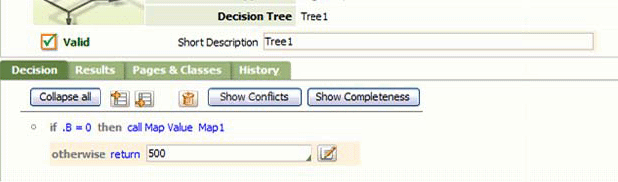
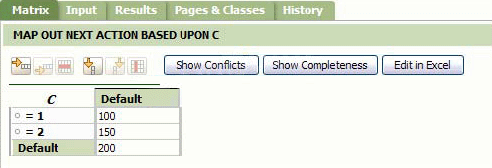
Given the Declarative Expression (set to Whenever inputs change), Decision Tree, and Map Value shown above, which condition causes the declarative network to attempt to recalculate the .TargetProp on the primary page? (Choose One)
- A. Changes to any property (A, B, C or E) on the primary page or property D on MyNamedPage
- B. Changes to any property (A, B, C or E) on the primary page
- C. Changes to property A only
- D. Changes to property A or B or E on the primary page
- E. Changes to property A or E on the primary page
正解:B 🗳️
Which of the following statements are most accurate about ad-hoc work? (Choose Two)
- A. In order to convert an ad-hoc work item into a case type, it must NOT be an instance of a class group
- B. Process commander allows an ad-hoc work to be the child of another ad-hoc work
- C. By default, an ad-hoc work item class is the class group of the current work
- D. An ad-hoc work item can only be converted into a case type as a subcase of an existing case type
- E. Both operations involving the creation of ad-hoc work and the conversion of ad-hoc work into a case type require a specific privilege
正解:B、C 🗳️
Consider the following situation:
A PRPC application is running within a 1.2 GB JVM (Java Virtual Machine). There is approximately 350 MB of free memory and garbage collector reclaims in average 32 MB of memory in the course of an hour.
The Rules Assembly count is 0 when a typical interaction executes in average 72.6 rules. The application CPU peaks periodically at 22% but otherwise runs in average around 12%.
The application is generating approximatively 30 database alerts per minute. The database CPU runs at an average of 75% peaking periodically at 96%. The alert log file does not report any byte warning with a 10 MB threshold defined.
Users are complaining about poor performance. Their interactions take in average 4.5 seconds.
Which of the following approaches is most appropriate to resolve this issue? (Choose One)
- A. Review the application profile log to determine which activities are taking the most time
- B. Review the database table indexes and utilize query plan to consider changes
- C. Limit the number of database interactions by storing most data on a series of declare pages
- D. Expose all columns used by the application
- E. Reduce the number of loop iterations executing on the large sets of data
正解:B 🗳️
What characteristic of authentication activities applies to both SSO (Single Sign-On) and PRPC-managed LDAP authentication? (Choose One)
- A. Calling an external Access Management system, such as SiteMinder
- B. Identifying and creating the operator if necessary
- C. Verifying the token provided by an external Access Management system, such as SiteMinder
- D. Authenticating the operator's password
正解:B 🗳️
Consider the following situation:
A PRPC application is running within a 1.2 GB JVM (Java Virtual Machine). There is approximatively 400 MB of free memory and garbage collector reclaims in average 32 MB of memory in the course of an hour.
The application is generating approximately 30 database alerts per minute. The database CPU runs at an average of 76% peaking periodically at 97%. The alert log file does not report any byte warning with a 10 MB threshold defined.
The Rules Assembly count is 0 when a typical interaction executes in average 74.6 rules. The application CPU peaks periodically at 20% but otherwise runs in average around 12%.
Users are complaining about poor performance. Their interactions take in average 4.15 seconds.
Which of the following approaches is most appropriate to resolve this issue? (Choose One)
- A. Review the application profile log to determine which activities are taking the most time
- B. Reconsider the database table indexes by reviewing query plans
- C. Limit the number of database interactions by storing most data on a series of declare pages
- D. Avoid retrieving the BLOB column during database interactions
- E. Reduce the number of loop iterations executing on the large sets of data
正解:B 🗳️

 松*彩
松*彩

