

 弊社は製品に自信を持っており、面倒な製品を提供していません。


信頼できるアフターサービス
私たちのGRE試験学習資料で試験準備は簡単ですが、使用中に問題が発生する可能性があります。GRE pdf版問題集に関する問題がある場合は、私たちに電子メールを送って、私たちの助けを求めることができます。たあなたが新旧の顧客であっても、私たちはできるだけ早くお客様のお手伝いをさせて頂きます。候補者がGRE General Test試験に合格する手助けをしている私たちのコミットメントは、当業界において大きな名声を獲得しています。一週24時間のサービスは弊社の態度を示しています。私たちは候補者の利益を考慮し、我々のGRE有用テスト参考書はあなたのGRE試験合格に最良の方法であることを保証します。
要するに、プロのGRE試験認定はあなた自身を計る最も効率的な方法であり、企業は教育の背景だけでなく、あなたの職業スキルによって従業員を採用することを指摘すると思います。世界中の技術革新によって、あなたをより強くする重要な方法はGRE General Test試験認定を受けることです。だから、私たちの信頼できる高品質のGraduate Record Examinations有効練習問題集を選ぶと、GRE試験に合格し、より明るい未来を受け入れるのを助けます。
GRE試験学習資料の三つバージョンの便利性
私たちの候補者はほとんどがオフィスワーカーです。あなたはGRE General Test試験の準備にあまり時間がかからないことを理解しています。したがって、異なるバージョンのGRE試験トピック問題をあなたに提供します。読んで簡単に印刷するには、PDFバージョンを選択して、メモを取るのは簡単です。 もしあなたがGRE General Testの真のテスト環境に慣れるには、ソフト(PCテストエンジン)バージョンが最適です。そして最後のバージョン、GREテストオンラインエンジンはどの電子機器でも使用でき、ほとんどの機能はソフトバージョンと同じです。GRE General Test試験勉強練習の3つのバージョンの柔軟性と機動性により、いつでもどこでも候補者が学習できます。私たちの候補者にとって選択は自由でそれは時間のロースを減少します。
現代IT業界の急速な発展、より多くの労働者、卒業生やIT専攻の他の人々は、昇進や高給などのチャンスを増やすために、プロのGRE試験認定を受ける必要があります。 試験に合格させる高品質のGRE General Test試験模擬pdf版があなたにとって最良の選択です。私たちのGRE General Testテストトピック試験では、あなたは簡単にGRE試験に合格し、私たちのGRE General Test試験資料から多くのメリットを享受します。
本当質問と回答の練習モード
現代技術のおかげで、オンラインで学ぶことで人々はより広い範囲の知識(GRE有効な練習問題集)を知られるように、人々は電子機器の利便性に慣れてきました。このため、私たちはあなたの記憶能力を効果的かつ適切に高めるという目標をどのように達成するかに焦点を当てます。したがって、Graduate Record Examinations GRE練習問題と答えが最も効果的です。あなたはこのGRE General Test有用な試験参考書でコア知識を覚えていて、練習中にGRE General Test試験の内容も熟知されます。これは時間を節約し、効率的です。
Admission Tests GRE 試験シラバストピック:
| セクション | 目標 |
|---|---|
| 分析的ライティング | - Issue分析課題 |
| 数量推論 | - データ分析と問題解決 - 算数、代数、幾何学 |
| 言語推論 | - 文章補完 - 読解 - 文の等価性 |
Admission Tests GRE General Test 認定 GRE 試験問題:
1. Writing for the New York Times in 1971. Saul Braun claimed that - todays superhero is about as much like his predecessors as today's child is like his parents." In an unprecedented article on the state of American comics,
"Shazam! Here Comes Captain Relevant. Braun wove a story of an industry whose former glory producing jingoistic fantasies of superhuman power in the 1930s and 1940s had given way to a canny interest in revealing the power structures against which ordinary people and heroes alike struggled following World War II Quoting a description of a course on *Comparative Comics" at Brown University, he wrote, 'New heroes are different-they ponder moral questions, have emotional differences, and are just as neurotic as real people.
Captain America openly sympathizes with campus radicals.. Lois Lane apes John Howard Griffin and turns herself black to study racism, and everybody battles to save the environment."" Five years earlier. Esquire had presaged Braun s claims about comic books: generational appeal, dedicating a spread to the popularity of superhero comics among university students in their special 'College Issue." As one student explained. "My favorite is the Hulk. I identify with him, he's the outcast against the institution.'1 Only months after the NW York Times article saw print. Rolling Stone published a six-page expose on the inner workings of Marvel Comics, while Ms. Magazine emblazoned Wonder Woman on the cover of its premier issue-declaring s Wonder Woman for President'' no less-and devoted an article to the origins of the latter-day feminist superhero.
Where little more than a decade before comics had signaled the moral and aesthetic degradation of American culture, by 1971 they had come of age as America's "native art::: taught on Ivy League campuses, studied by European scholars and filmmakers, and translated and sold around the world, they were now taken up as a new generation's critique of American society. The concatenation of these sentiments among such diverse publications revealed that the growing popularity and public interest in comics (and comic-book superheroes) spanned a wide demographic spectrum, appealing to middle-class urbamtes, college-age men. members of the counterculture, and feminists alike. At the heart of this newfound admiration for comics lay a glaring yet largely unremarked contradiction: the cultural regeneration of the comic-book medium was made possible by the revamping of a key American fantasy figure, the superhero, even as that figure was being lauded for its realism"" and social relevance."" As the title of Braun's article suggests, in the early 1970s, "relevance" became a popular buzzword denoting a shift in comic-book content from oblique narrative metaphors for social problems toward direct representations of racism and sexism, urban blight, and political corruption.
The author of the passage talks about Wonder Woman primarily to
A) note a significant improvement in the way women were represented in comics
B) provide an example of a change in the public perception of comics" characters
C) suggest the extent to which the comics industry remained a male-dominated field
D) contest the claim that superheroes were generally portrayed as outcasts
E) identify the gender stereotypes in comics against which feminists struggled
2. Exhibit.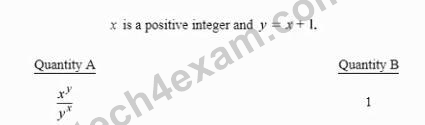
A) Quantity B is greater.
B) The two quantities are equal.
C) The relationship cannot be determined from the information given.
D) Quantity A is greater.
3. A total of S72.000 was invested for one month in a new money market account that paid simple annual interest at the rate of r percent- If the investment earned $360 in interest for the month, what is the value of r?
A) 6.0
B) 7.0
C) 7.5
D) 5.0
E) 6.5
4. When positive integer m is divided by 6. the remainder is 4. When positive integer p is divided by 6. the remainder is 5. What is the remainder when the product mp is divided by 6 ?
A) 2
B) 1
C) 4
D) 3
5. In 1755 British writer Samuel Johnson published an acerbic letter to Lord Chesterfield rebuking his patron for neglect and declining further support. Johnson's rejection of his patron's belated assistance has often been identified as a key moment in the history of publishing, marking the end of the culture of patronage. However, patronage had been in decline for 50 years, yet would survive, in attenuated form, for another 50. Indeed.
Johnson was in 1762 awarded a pension by the Crown-a subtle form of sponsorship, tantamount to state patronage. The importance of Johnson's letter is not so much historical as emotional: it would become a touchstone for all who repudiated patrons and for all who embraced the laws of the marketplace.
The author of the passage mentions Johnson's 1762 pension award in order to
A) provide a specific example of patronage's surviving into the second half of (he eighteenth century
B) emphasize that patronage still helped support Johnson's writing after his letter to Chesterfield
C) eighteenth century of private patronage's being replaced by state sponsorship
D) provide evidence for a general trend in the later half of the
質問と回答:
| 質問 # 1 正解: B | 質問 # 2 正解: C | 質問 # 3 正解: A | 質問 # 4 正解: A | 質問 # 5 正解: B |

 石*瞳
石*瞳

